Retatrutide Chemical
Why does retatrutide last so long?
I linger over albumin binding, the feature that helps retatrutide stay in circulation. Its engineering makes the clinical experience over time especially interesting.
The early human trial
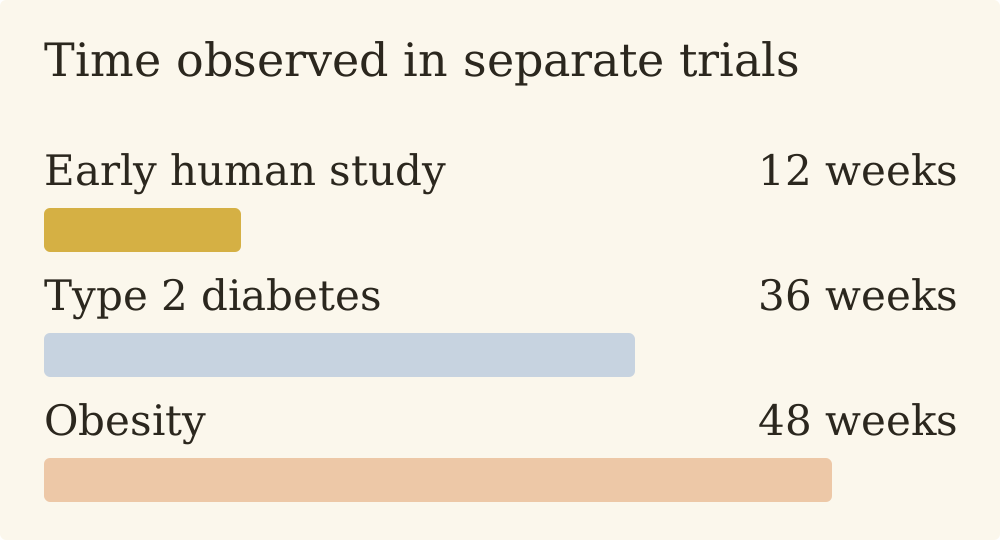
In the 12-week study of 72 adults with type 2 diabetes, retatrutide had a half-life of approximately 6 days: that is how long its concentration took to fall by half. The molecule was still around well after the day it entered the body. Researchers used that persistence to support once-weekly administration in the trial.
I arrived at this paper expecting to skip straight to the weight result. Instead, I got stuck on the half-life. It helps explain why retatrutide has to be understood as an exposure unfolding over time, with changes in appetite and tolerability alongside the changing scale.
The highest escalating-dose group lost 8.96 kg more than the placebo group over those 12 weeks. That was an early finding in people with diabetes; the later obesity trial involved a different population and a longer period. The early trial also recorded treatment-emergent adverse events in 63%, mostly gastrointestinal. The molecule’s staying power came with an experience to investigate.
Albumin binding
Retatrutide is a synthetic peptide with a 39-amino-acid chain and a fatty-acid attachment that helps it bind albumin, a protein in blood. That attachment prolongs its time in circulation. The review of its molecular design and early trials puts this prolonged exposure beside its activity at the GIP, GLP-1 and glucagon receptors.
A small attachment changing the lifetime of a larger molecule is exactly the kind of chemical detail I enjoy. Receptor activity describes the signals it can send; half-life describes how slowly its concentration falls. Both matter to the story.
The retatrutide chemistry page follows those features without turning the molecule into a ranking of hormone names.
Retatrutide results over the trial weeks
In the 48-week phase 2 obesity trial, 338 adults took part. The 12 mg group lost an average 24.2% of starting body weight, compared with 2.1% for placebo. These were trial-administered amounts. The same paper reported a dose-dependent rise in heart rate that peaked near week 24.
Other measurements ran on their own timelines. In the phase 2 type 2 diabetes trial, the 12 mg group’s HbA1c, a blood marker of average glucose, fell 2.02 percentage points at week 24; body weight fell 16.94% by week 36. In the liver-fat substudy, the 12 mg group’s relative liver-fat reduction was 82.4% at week 24 and 86.0% at week 48.
The breadth of change in these trials impresses me. I dislike losing all those observations inside a single impressive percentage. The timing and the organ being measured are part of what makes each finding useful.
Off-treatment follow-up
A long half-life says how a drug leaves the blood. The durability of weight loss after treatment ends is a different question. A review of weight regain after GLP-1-based treatment describes rebound with related therapies; it supplies context for retatrutide, while retatrutide-specific long-term follow-up remains incomplete.
Here I start asking about the period after exposure. A persistent molecule is an engineering achievement. A benefit that persists after treatment would be a clinical finding, and that finding still needs its own evidence.
Retatrutide remains investigational and unapproved by any regulator in the mid-2026 record covered here. Access is through clinical trials. The availability questions cover that practical limit, and the effects page follows appetite, pulse and the reasons people stopped treatment.